Here is the shift nobody warned you about. Nearly 7 in 10 Google searches end without users clicking through to a website. People get their answer right on the results page, or straight from an AI chat, and never visit a website.
That one change is why AEO vs SEO is the debate every marketer is having right now.
For twenty years, the game was simple. You optimized a page, you ranked, you got the click. Now two games run at once. One gets you into the list of results. The other gets you into the answer itself.
This guide breaks down the real difference between AEO and SEO, shows how they quietly feed each other, and hands you a plan to win both. No fluff, just what moves the needle.
What Is SEO (Search Engine Optimization)?
SEO is the practice of improving your site so it ranks higher in search engines like Google and Bing. The goal is a click. A real person lands on your page and, ideally, becomes a customer.
Search engine optimization runs on a few core levers.
- Technical health. Crawlability, site speed, and a clean mobile experience.
- Content and keywords. Useful pages that match what people search for.
- Backlinks and domain authority. Votes of trust from other sites.
- Brand mentions. Your name showing up across the web.
When these line up, your organic rankings climb. Higher organic rankings mean more visibility, more traffic, and more chances to convert. That part has not changed one bit.
What Is AEO (Answer Engine Optimization)?
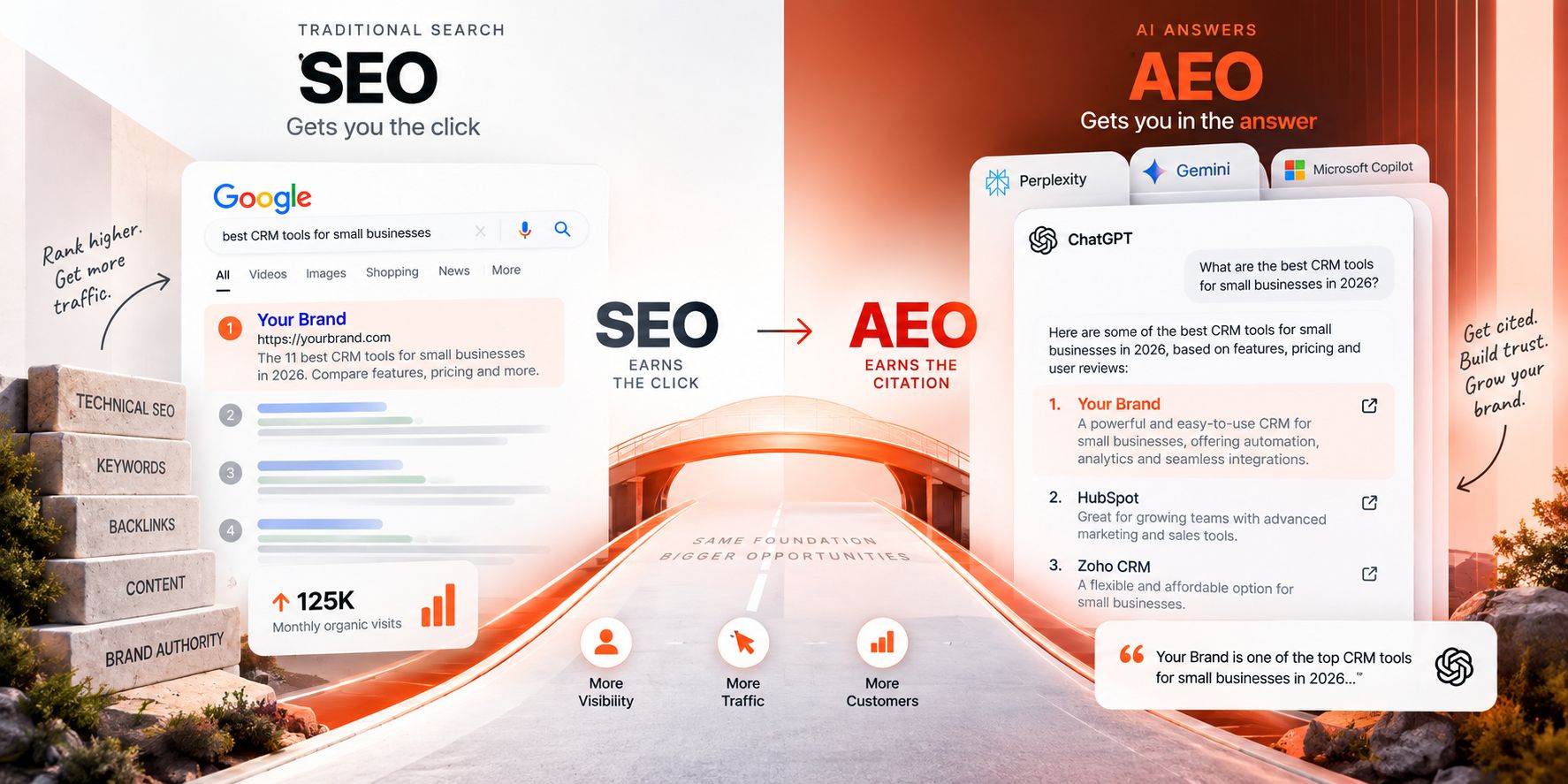
AEO is the practice of structuring your content so AI systems can understand it, trust it, and quote it when they build an answer. The goal here is a citation, not a click.
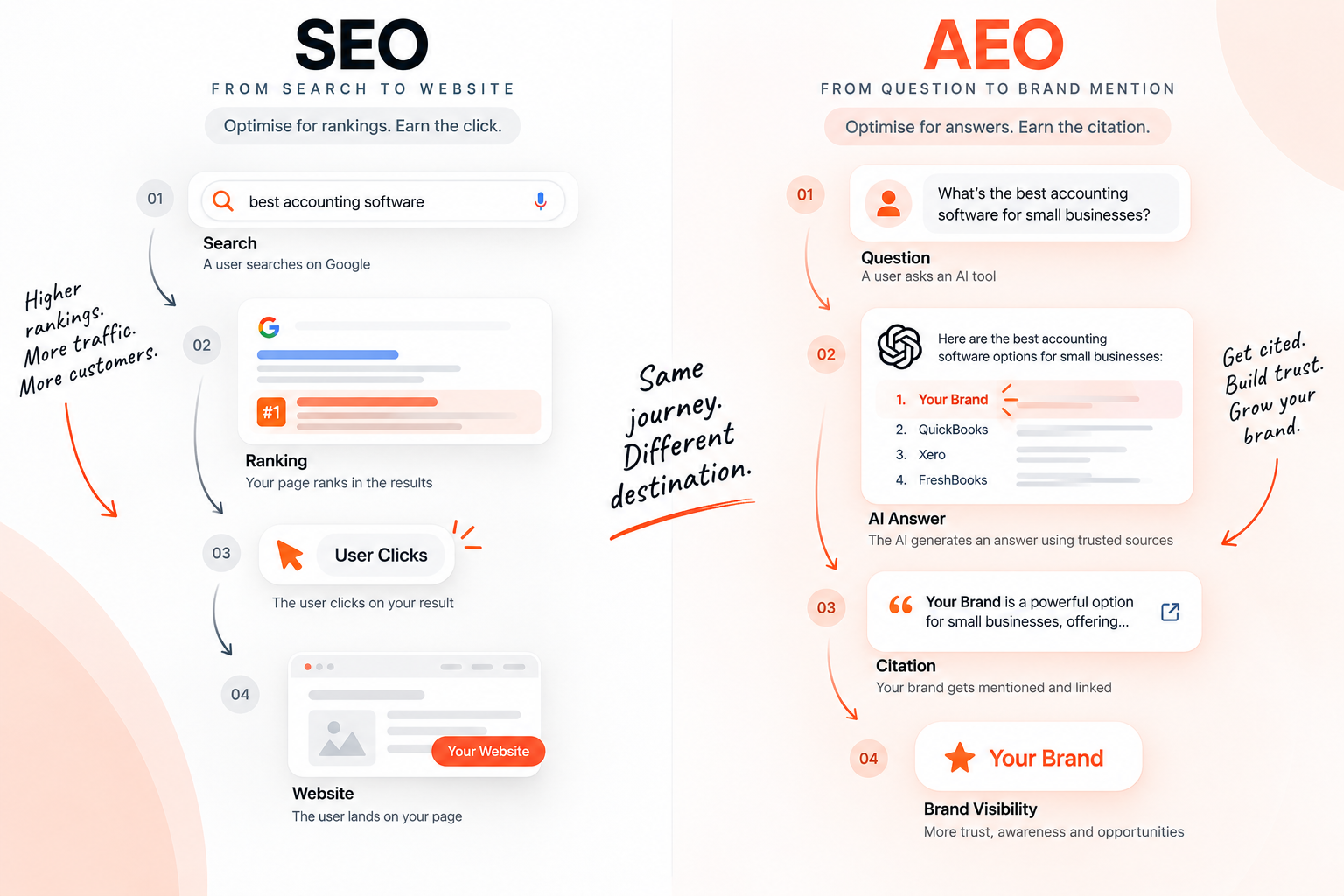
Answer engine optimization targets a handful of places.
- Google AI Overviews and AI Mode
- ChatGPT
- Perplexity
- Gemini and Microsoft Copilot
- Featured snippets and voice assistants
Think about the last time you asked ChatGPT for a recommendation. It named a few options, maybe linked a source or two. AEO is how you become one of those named sources instead of the brand nobody mentions.
Where Does GEO Fit In?
You will see a third term thrown around a lot. GEO, short for generative engine optimization, is about getting cited when an AI writes a long, generative answer.
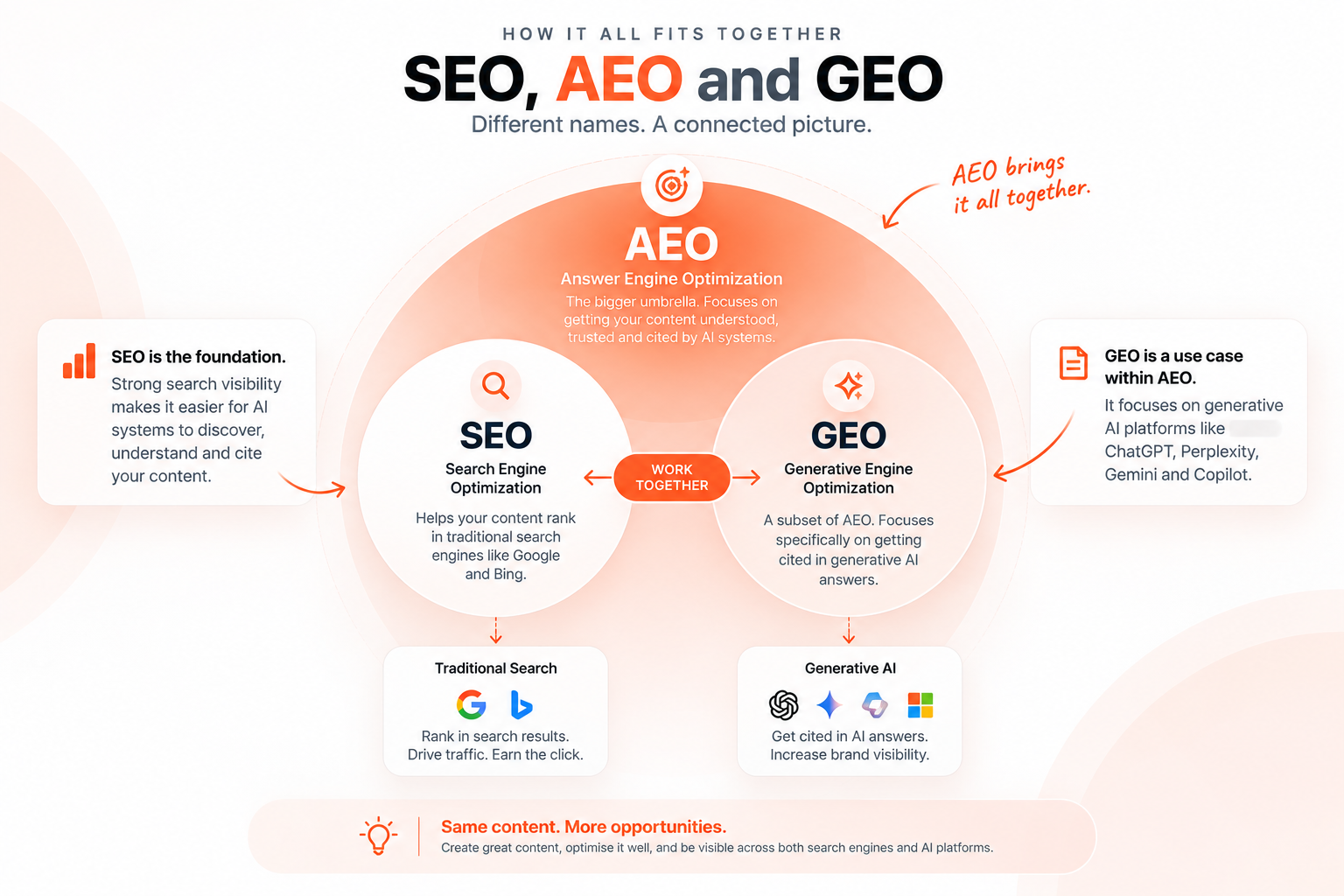
In practice, GEO is a subset of AEO. The two overlap so heavily that the day to day work is nearly identical. So when you weigh SEO vs AEO vs GEO, treat AEO and GEO as close cousins, and SEO as the foundation both of them stand on.
AEO vs SEO: The Key Differences
Here is the difference between AEO and SEO at a glance.
Read that table again, and one thing jumps out. The difference between AEO and SEO is not the content itself. It is what you optimize the content to do. SEO wants it to rank. AEO wants it to be quoted.
Example. Say you run a project management SaaS. For SEO, you write a 2,000 word guide on remote team productivity so it ranks. For AEO, you make sure the top of that same page answers how remote teams stay productive in two clean sentences an AI can lift. Same page. Two jobs.
How SEO and AEO Feed Each Other
Here is what most AEO vs SEO articles skip right over. The two are wired together. Your SEO performance directly shapes your AEO results, whether you plan it that way or not.
How Organic Rankings Drive AI Citations
AI engines do not invent sources out of thin air. They pull from pages that already rank. Ahrefs found that 76% of AI Overview citations come from pages sitting in the top 10 organic results.
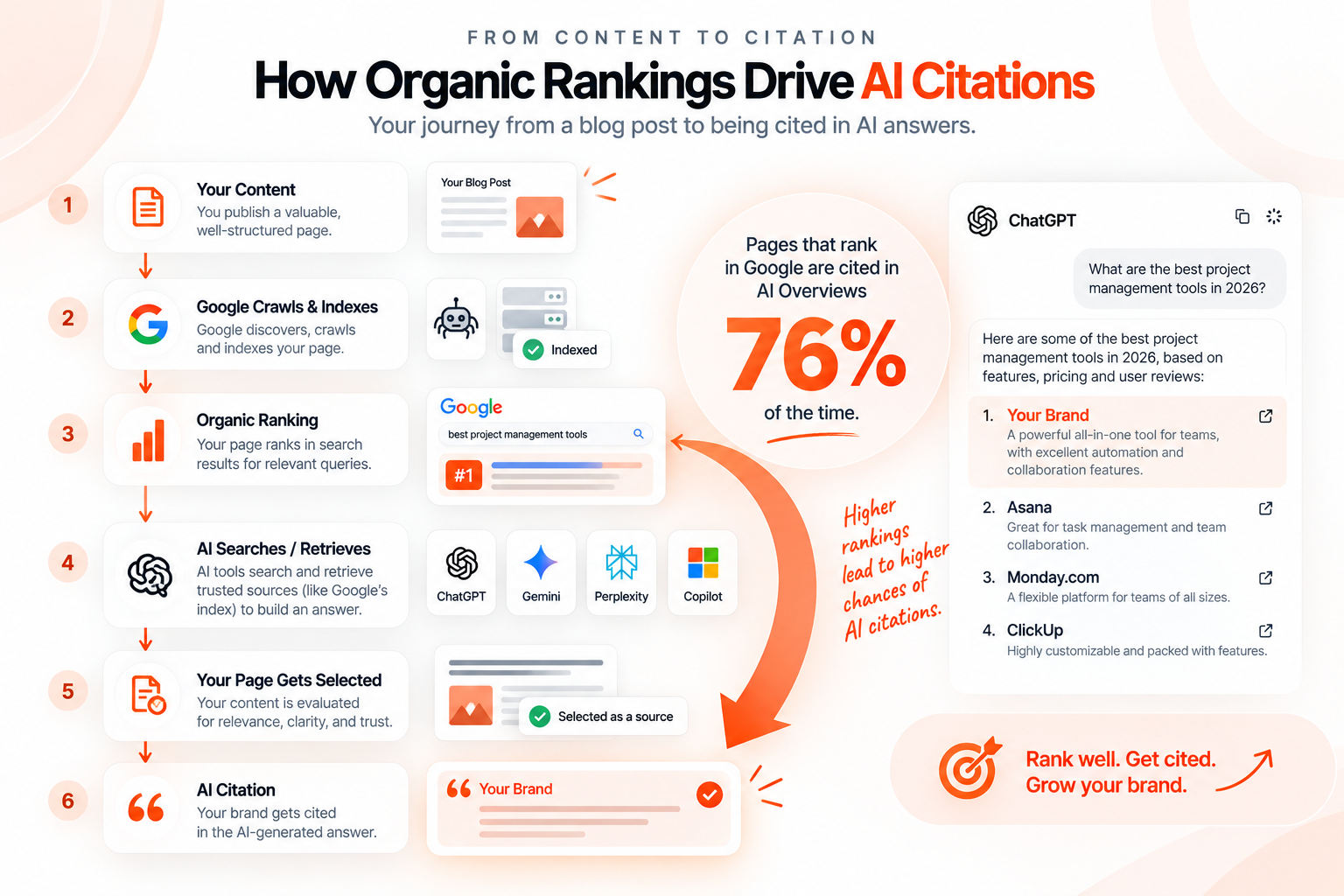
Read that again. If you are not ranking, you are close to invisible to the answer engine. Strong organic rankings are no longer just an SEO trophy. They are the entry ticket to getting cited by AI.
How Brand Mentions Shape What AI Recommends
Organic rankings get your page pulled in. Brand mentions decide whether the AI actually names you.
Language models learn who to trust by watching your brand get discussed across the web. On Reddit. On review sites like G2 and Capterra. In roundups and industry blogs. The more often your brand shows up next to your topic, the more likely ChatGPT or Perplexity is to recommend you by name.
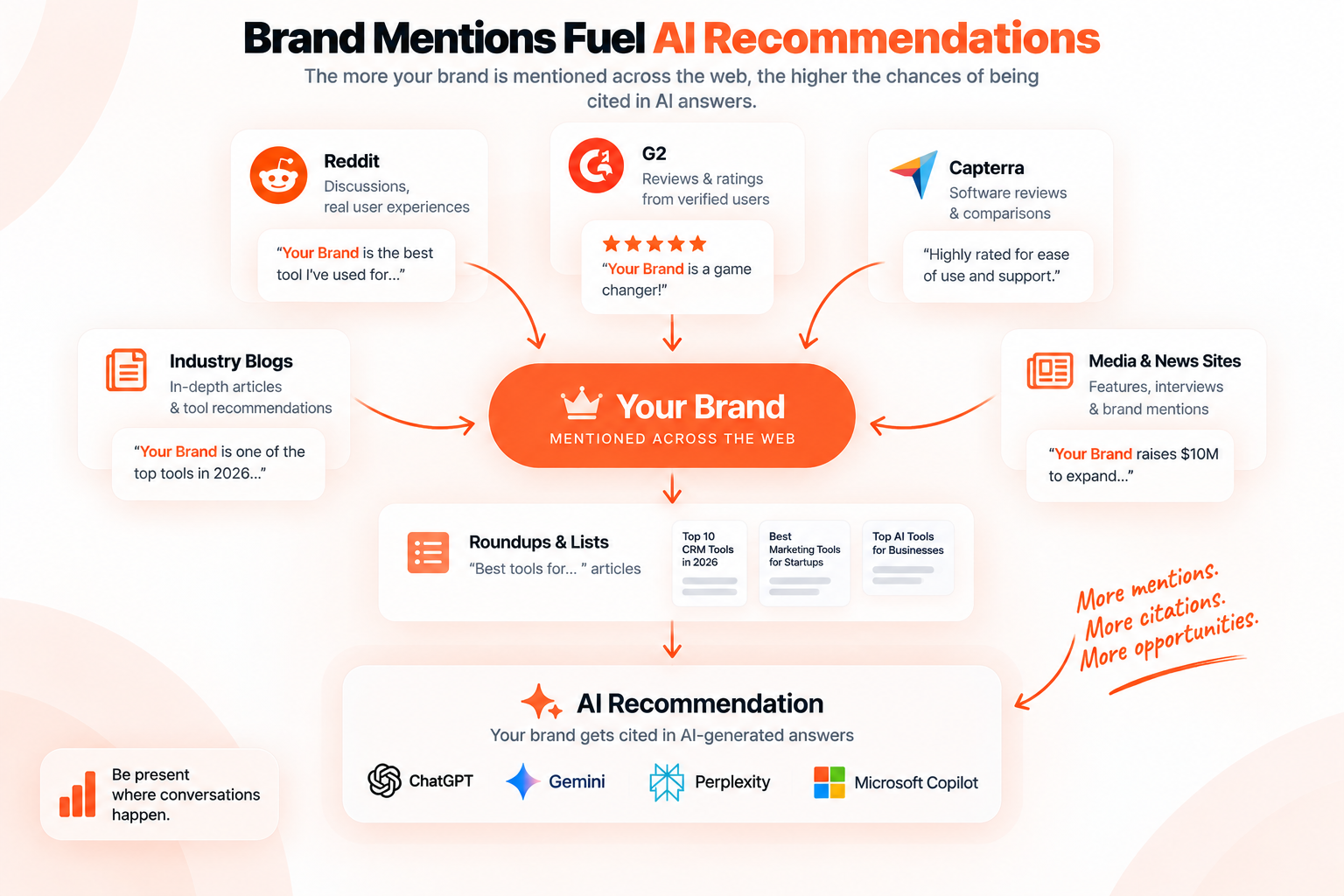
This is why brand mentions and backlinks matter more than ever. They lift your organic rankings and your AI visibility at the same time, from the same effort.
Is SEO Dead in 2026?
No. SEO is not dead. It is the foundation AEO stands on.
Here is the myth. AI search killed SEO, so you should drop it and chase citations instead.
Here is the reality. AI answer engines pull from the same crawlable web that Google indexes. If your site cannot be crawled, is not indexed, loads badly, or has no authority, AI systems will not find or trust it either.
Google has said it plainly. There is no secret optimization for AI Overviews beyond solid search fundamentals. Weak SEO produces weak AEO. Anyone selling AEO as a shortcut around bad SEO is selling smoke.
SEO vs AEO: Which Should You Prioritize?
You should not pick one. But you can decide where to lean first, based on where you are today.
- Just starting out. Fix your SEO fundamentals first. Crawlability, useful content, internal links, and a few strong backlinks. Without this, AEO has nothing to stand on.
- Already ranking well. Add the AEO layer. Lead with the answer, use question-based headings, add an FAQ section, and keep pages fresh.
- Selling comparison-heavy products like SaaS. Push hard on AEO for versus and best of content, because that is what buyers ask AI. Keep SEO for deep feature and docs pages.
- Local or service business. Lean into AEO for voice and conversational queries, and keep SEO for wider reach.
Notice the pattern. SEO comes first, AEO builds on top. Every single time.
How to Make One Page Win Both
You do not need two content strategies. You need one page that serves humans and AI at the same time.
Do all of this on your best pages first. Then repeat across the rest.
Frequently Asked Questions
What is the main difference between AEO and SEO?
SEO gets your pages ranked so people click through to your site. AEO gets your content cited when AI tools write an answer. SEO chases the click; AEO chases the citation. Both make you visible, just in different places.
Is AEO replacing SEO?
No. AEO is not replacing SEO; it sits on top of it. AI engines pull most of their citations from pages that already rank, so strong SEO is what makes AEO possible in the first place.
What is the difference between AEO and GEO?
AEO is about being the answer across all answer engines, including featured snippets and voice. GEO, or generative engine optimization, focuses on AI-generated responses. GEO is really a subset of AEO, and the day to day work overlaps almost entirely.
Do backlinks still matter for AI search?
Yes. Backlinks lift your organic rankings, and higher rankings feed AI citations. Backlinks also carry brand mentions that teach AI systems to trust and recommend you. They matter for both SEO and AEO.
How do I measure AEO success?
Track how often your brand appears in AI answers for your key questions. Watch your share of those answers against competitors. Add citation frequency and featured snippet ownership to your usual organic rankings and traffic reports.
Should a small business focus on SEO or AEO first?
Start with SEO. Get your site crawlable, useful, and earning a few solid links. Once you rank, layer AEO on your most important pages. SEO first, AEO second, always in that order.
The Bottom Line on AEO vs SEO
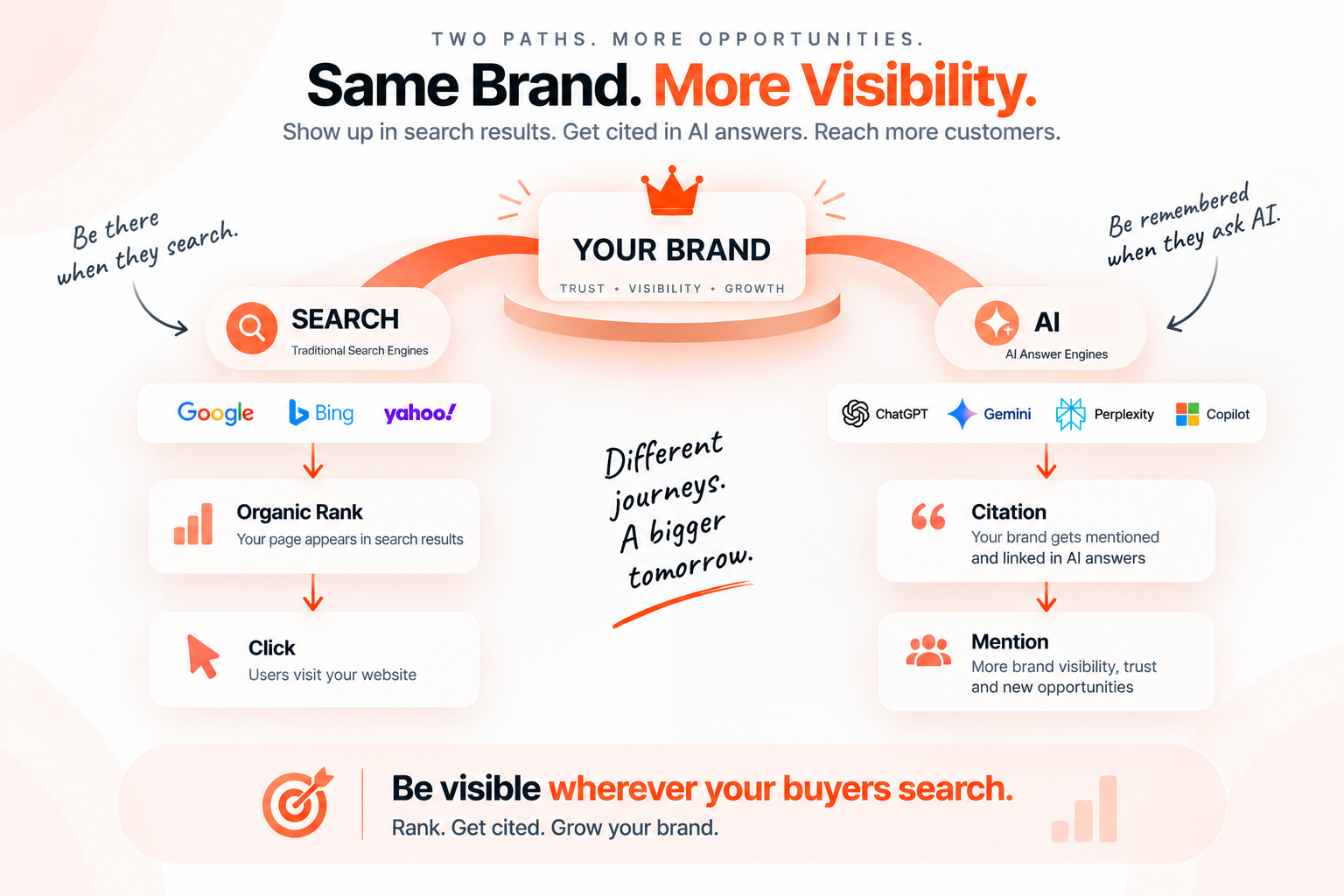
The AEO vs SEO debate has a simple answer. Stop treating them as rivals.
SEO earns the click. AEO earns the citation. Your organic rankings are what get you into AI answers, and your brand mentions are what get you named. One strategy, two payoffs.
Start with strong SEO. Layer AEO on your best pages. Build the backlinks and brand mentions that lift both. Do that, and you show up wherever your buyers look, whether they scroll a results page or read an answer from ChatGPT.
That is exactly the work Anchorial does. We build the links and brand mentions that lift your organic rankings, and the AEO foundation that gets you cited across AI search. If you want to win both layers, let's talk.