You can rank number one on Google and still lose the click. An Ahrefs study found that the top result loses 58 percent of its clicks once a Google AI Overview appears. Buyers take the AI answer and leave, so if your brand is not one of the sources it names, you are invisible. That is what AEO tools fix. They show you where AI engines cite you, where they cite a rival, and what to change. This guide ranks the best AEO tools of 2026 by what each one actually does.
Quick Answer: The 9 Best AEO Tools at a Glance
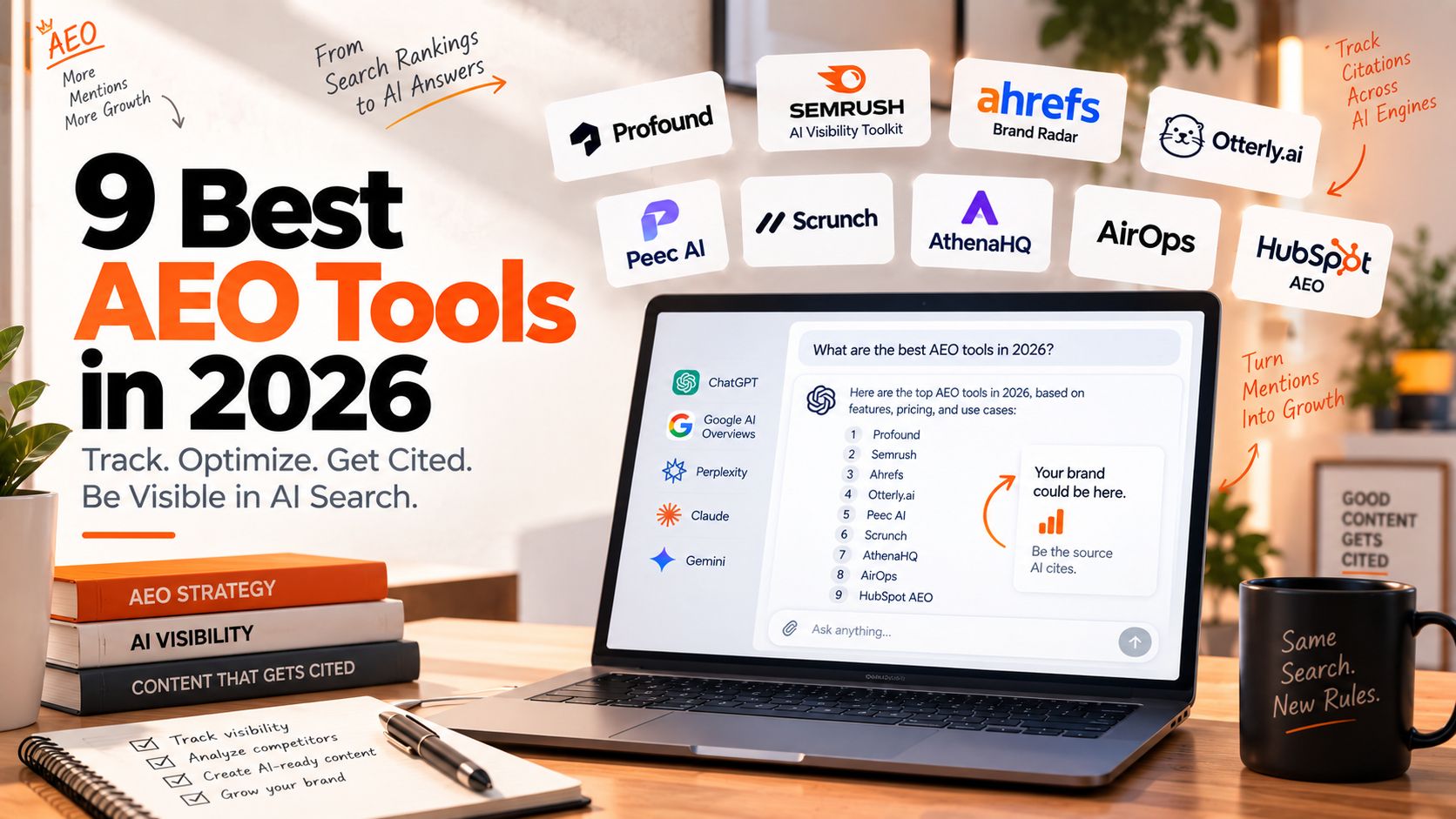
Profound leads on depth, Otterly.ai wins on price, and Semrush is the easy pick if you already use it. Here is the full list side by side.
Verdict. Pick Profound if depth matters most. Pick Otterly.ai if price matters most. Pick Semrush or Ahrefs if you already live in their suites.
What Are AEO Tools and Why You Need One
AEO tools track and improve how often AI answer engines cite your brand. AEO stands for answer engine optimization. It is the practice of getting your content named inside AI-generated answers, not just ranked in blue links.
AEO tools run buyer questions through engines like ChatGPT, Perplexity, Google AI Overviews, Gemini, and Claude. Then they report whether you were mentioned, quoted, or ignored.
Good AEO software does three things.
- Tracks your brand visibility across AI engines
- Shows which competitors get cited for the prompts you care about
- Recommends content changes to help you earn more citations
Some people call this category GEO software or AI visibility tools. The label changes. The job stays the same.
AEO Tools vs SEO Tools
Here is the difference in one line. SEO tools track where you rank. AEO tools track whether AI answers mention you at all.
SEO optimizes for a position on a results page. You compete for spot one and count on the click.
AEO works one layer up. The model reads across many pages and writes a single answer. The user may never click a link. So ranking first no longer guarantees you are seen.
That is why AEO vs SEO is not a choice between two camps. You need both. Your SEO tool still matters. Your AEO tool covers the ground it cannot reach.
How We Picked the Best AEO Tools
We judged each tool on coverage, accuracy, action, and honest cost. We sell no software, so no tool here is ranked to push our own. We scored each platform on the things that decide whether it earns a seat in your stack.
- Engine coverage. How many answer engines it tracks, including ChatGPT, Perplexity, Gemini, Claude, and Google AI Overviews.
- Citation tracking accuracy. Whether it catches real mentions, not guesses.
- Actionability. Whether it helps you fix visibility, not just watch it drop.
- Competitor benchmarking. Whether you can see who gets cited instead of you.
- Integrations and API. Whether the data can flow into your other tools.
- Enterprise readiness. Single sign-on, security, and multi-brand support.
- Price and value. What you actually pay once the add-ons land.
The 9 Best AEO Tools in 2026
Each tool below suits a different kind of team. Read the verdict first, then check the fit.
1. Profound
Best overall for enterprise AI visibility.
Profound is the category leader and the most benchmarked name in AEO. It raised a $96 million round in early 2026 at a $1 billion valuation, and Fortune 500 brands use it to track citations across eight AI surfaces.
It tracks ChatGPT, Perplexity, Gemini, Claude, Google AI Overviews, Copilot, Grok, and DeepSeek. Its prompt-intelligence dataset is the deepest in the space.
- Standout feature. Historical citation data and prompt-volume insight that few rivals match.
- Best for. Large brands with an analyst who can act on the data.
- Pricing. Starter is $99 a month and covers ChatGPT only. Growth is $399 a month and adds Perplexity and Google AI Overviews with 100 prompts. Enterprise is custom and often runs $2,000 to $5,000 a month.
- Limitations. The entry plan is ChatGPT only. The features most teams want sit behind the enterprise tier.
2. Semrush AI Visibility Toolkit
Best for teams already on Semrush.
If you already pay for Semrush, this is the easy call. The AI Visibility Toolkit brings answer engine optimization tracking into the suite you open every day.
It tracks ChatGPT, Google AI, Gemini, and Perplexity with daily updates. You get an AI visibility score, prompt research, competitor gaps, and sentiment.
- Standout feature. AI visibility tracking that lives inside your existing SEO workflow.
- Best for. Marketers who want credible tracking at the lowest extra cost.
- Pricing. $99 a month per domain as a standalone add-on with 25 prompts. Semrush One bundles start at $199 a month with 50 prompts.
- Limitations. Pricing is per domain. Extra users, prompts, and domains each cost more, so agency bills climb fast.
3. Ahrefs Brand Radar
Best for data depth.
Ahrefs Brand Radar answers one question better than almost anyone. What do brands actually get cited for in real AI conversations?
It draws on a database of more than 260 million real user prompts. That real-prompt corpus is its core edge over tools that only run synthetic tests.
- Standout feature. A massive real-prompt database instead of guessed queries.
- Best for. Ahrefs users who want the deepest data and can fund it.
- Pricing. $199 per platform a month, or $699 for all platforms, on top of an Ahrefs base plan from $129. All-in cost runs roughly $828 to $1,148 a month.
- Limitations. It is the priciest option here. You need an Ahrefs plan first.
4. Otterly.ai
Best for solo marketers and tight budgets.
Otterly.ai is the cheapest honest tracker on this list. It hit a sweet spot most AEO tools miss, real coverage at a price a solo marketer can afford.
It tracks brand visibility across ChatGPT, Google AI Overviews, Perplexity, and Copilot. It was named a G2 High Performer in the first AEO report.
- Standout feature. Clean, affordable tracking you can pull up during a client call.
- Best for. Freelancers, solo founders, and small teams.
- Pricing. From $29 a month for 15 prompts. Claude and Gemini are paid add-ons.
- Limitations. Prompt limits are low. Some engines cost extra.
5. Peec AI
Best AEO tool for agencies.
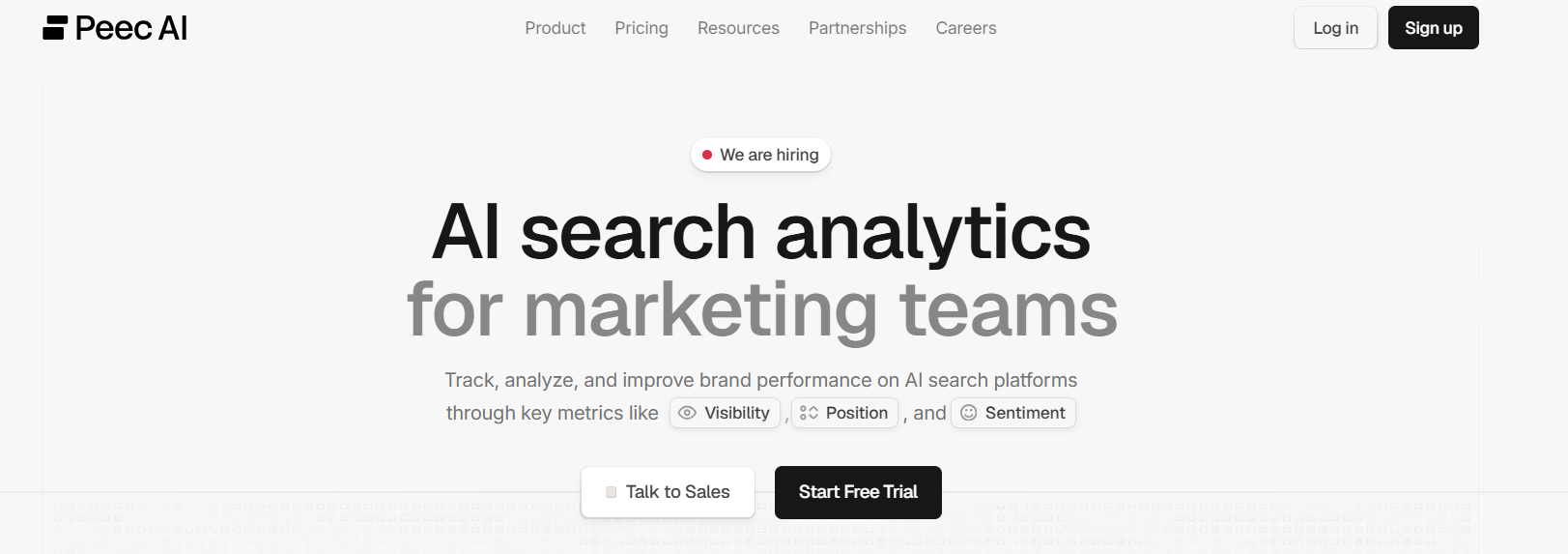
Peec AI is built with agencies in mind. Its reporting is clean enough to put in front of a client without extra work.
It tracks the engines you choose and focuses on the visibility data an account manager needs to show progress.
- Standout feature. Client-ready reporting that saves agencies hours.
- Best for. Agencies managing AEO for several brands.
- Pricing. From $80 a month for 50 prompts and three engines. Agency reporting plans start around $420 a month.
- Limitations. Entry plans cap you at three engines. Costs scale with prompts and clients.
6. Scrunch
Best for the full AEO workflow.
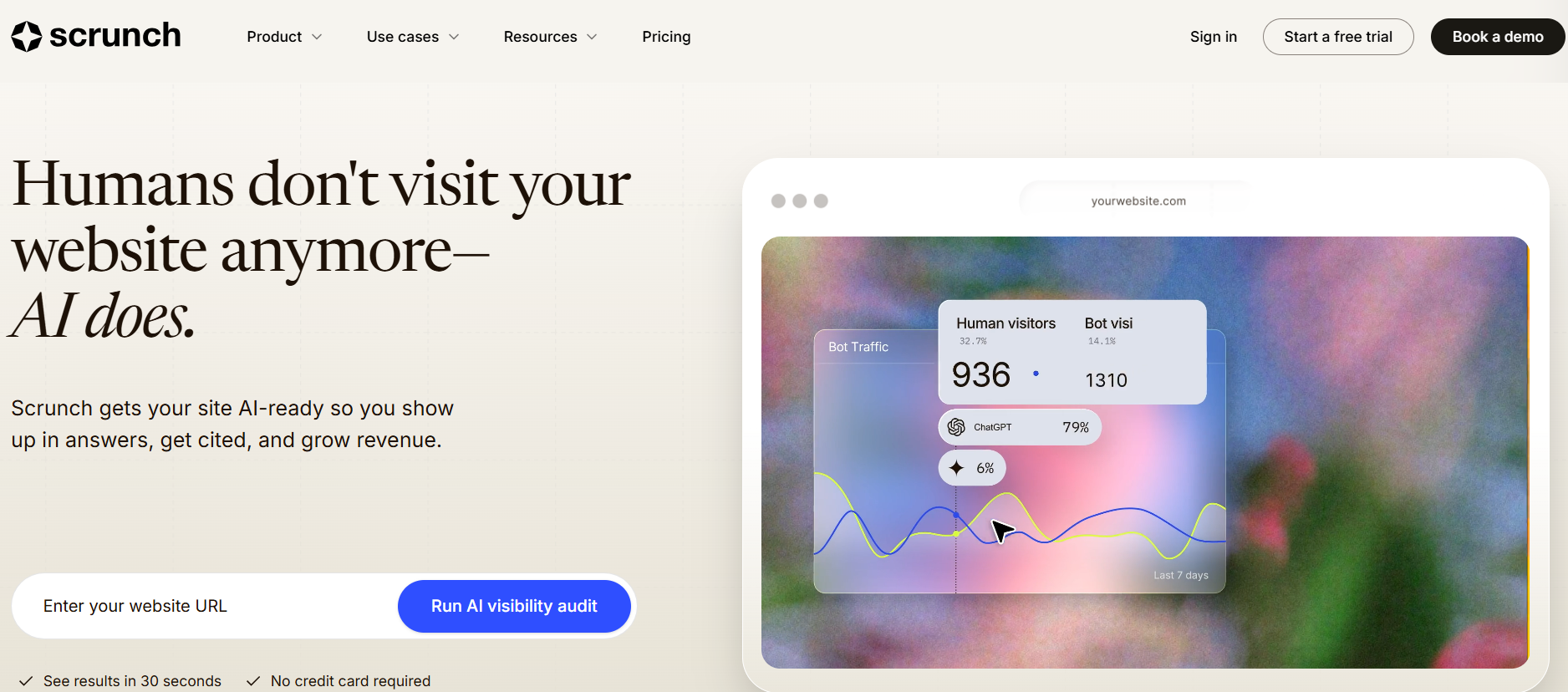
Scrunch covers more of the job than a pure tracker. It monitors, audits, optimizes, and even serves AI-ready content to bots.
Its standout is the Agent Experience Platform. It delivers optimized content to AI agents while your human-facing site stays the same. It holds a 4.6 out of 5 rating on G2.
- Standout feature. Content delivery straight to AI agents, not just recommendations.
- Best for. Enterprise teams that want monitoring and execution in one place.
- Pricing. Core is $250 a month. Agency plans start at $500 a month. Enterprise is custom.
- Limitations. It does not yet offer general AI content generation. Pricing suits funded teams, not solos.
7. AthenaHQ
Best for tying AI visibility to revenue.
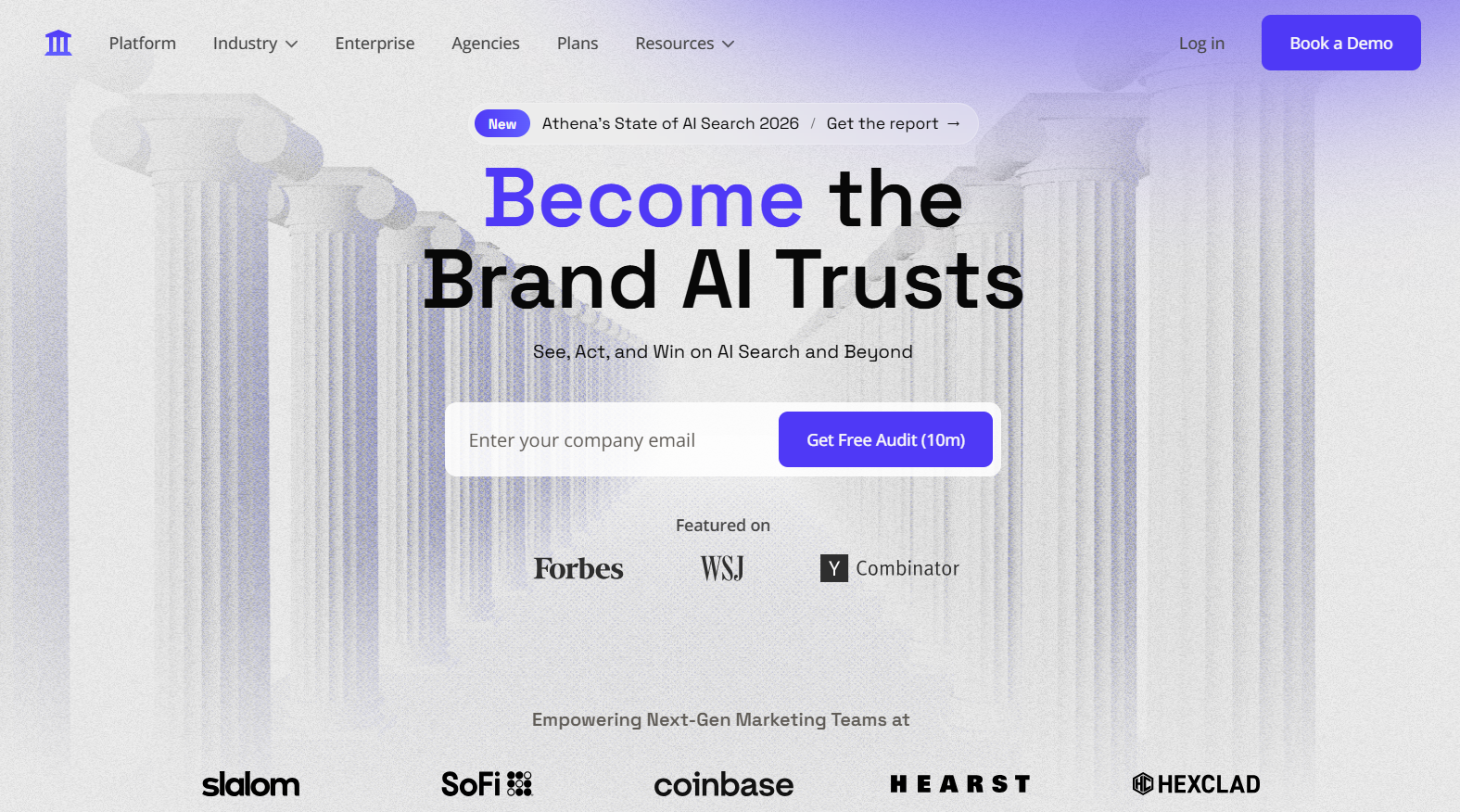
AthenaHQ was built by former Google and DeepMind engineers. It stands out by connecting citations to business outcomes, not just dashboards.
It tracks eight or more engines, prioritizes fixes through an Action Center, and ties visibility to leads and sales. Seats are unlimited, so a whole team can use it.
- Standout feature. Revenue attribution that shows the impact of AEO on your pipeline.
- Best for. Ecommerce and B2B teams that must prove return on investment.
- Pricing. Self-serve starts around $295 a month. It uses credits, where one credit equals one AI response.
- Limitations. Credit-based pricing is hard to forecast. Heavy multi-region tracking burns credits fast.
8. AirOps
Best for content execution at scale.
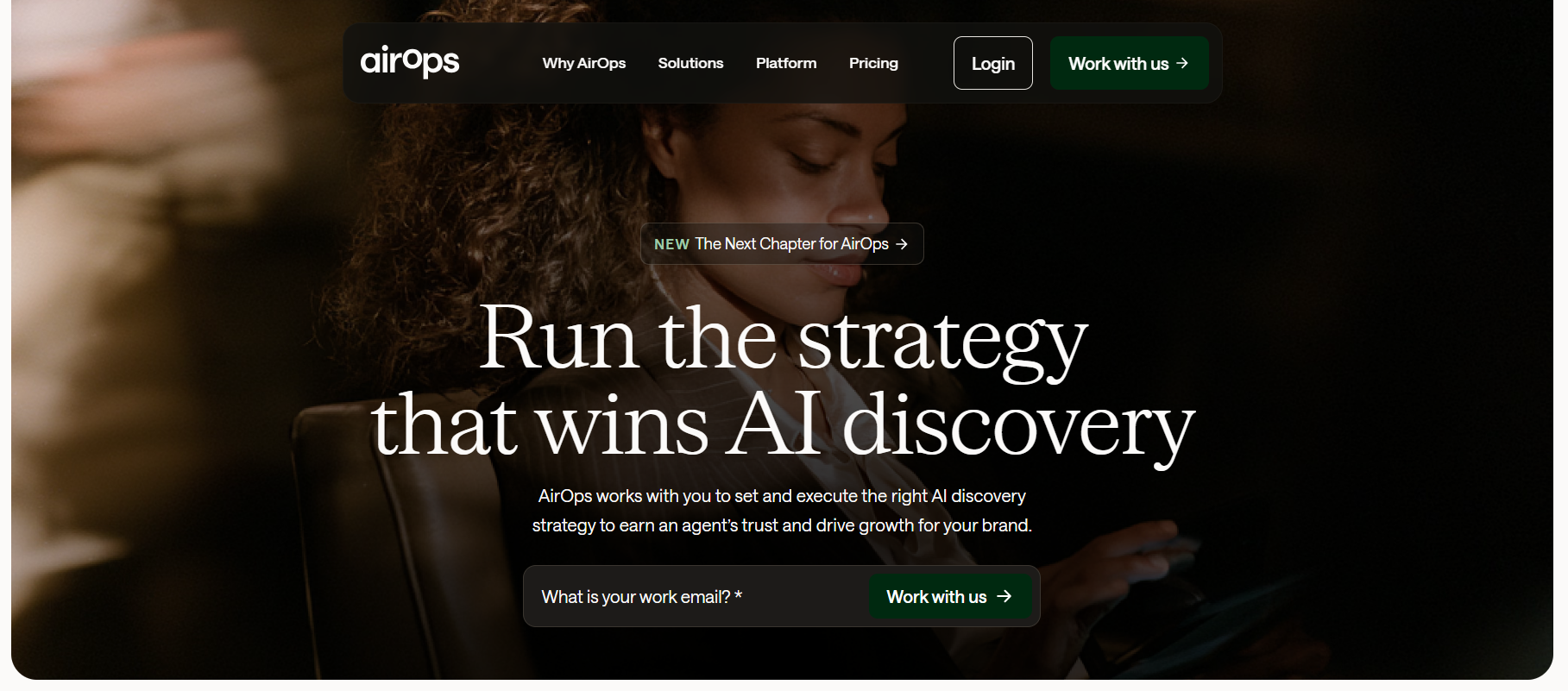
AirOps is less a tracker and more an engine room. It turns AI visibility signals into a content production system you build yourself.
It uses no-code workflows, called Grids, to create and refresh content at volume with human review built in. Content teams with real output love it.
- Standout feature. Custom, no-code content workflows that scale production.
- Best for. Technical content teams with heavy, recurring output.
- Pricing. No public pricing. A three-week trial leads to a sales call. The Solo plan covers ChatGPT only. Pro includes 75,000 tasks.
- Limitations. You build and own the workflows. Native tracking depth is thinner than dedicated monitors.
9. HubSpot AEO
Best for HubSpot-connected teams.
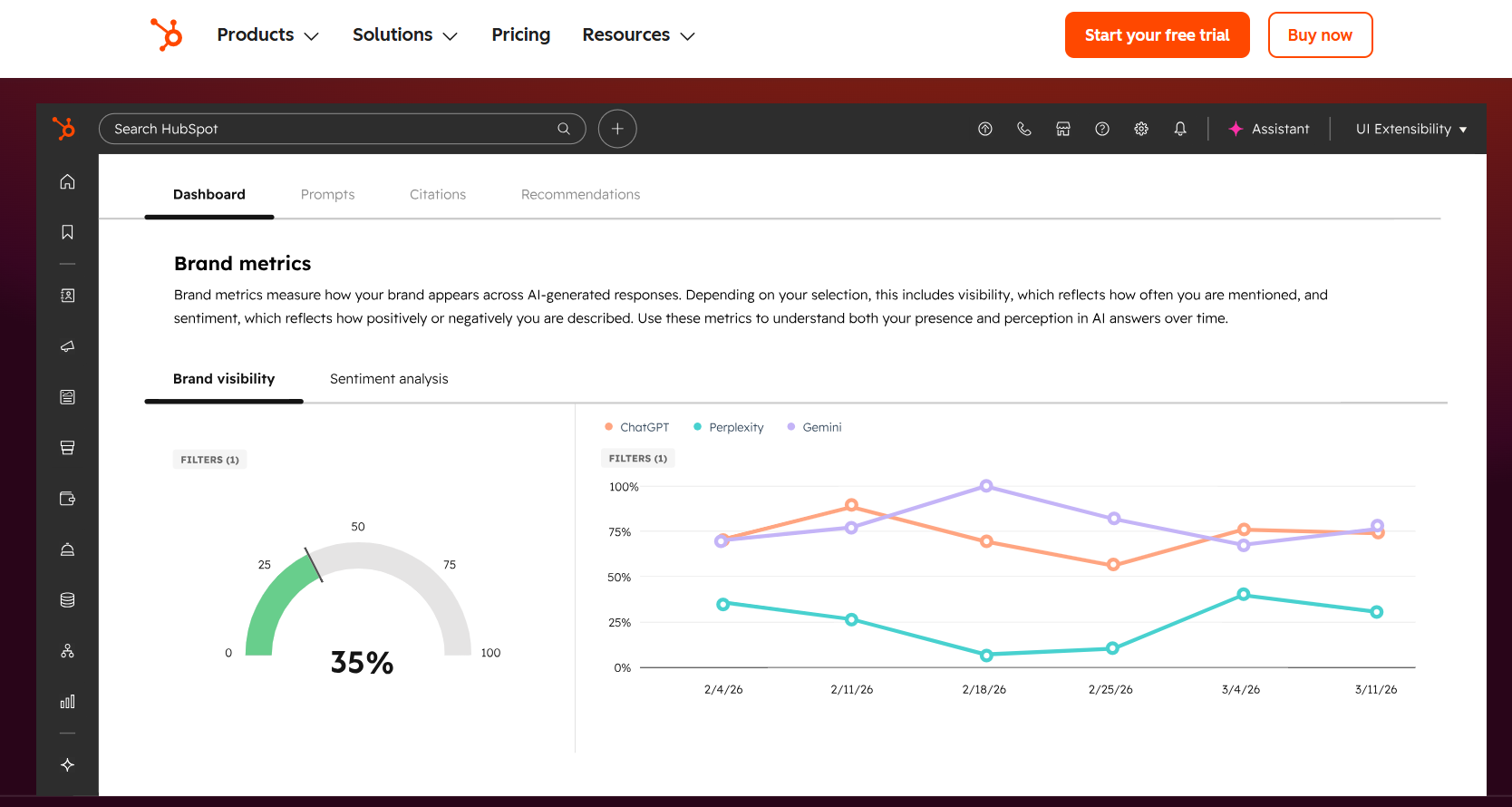
HubSpot AEO makes the most sense if your team already runs on HubSpot. It ties AI visibility to your CRM data from day one.
It tracks brand visibility, monitors prompts, and hands you prioritized recommendations. In Marketing Hub Pro and Enterprise, visibility links to pipeline and revenue.
- Standout feature. AI visibility connected to your CRM and pipeline.
- Best for. Teams already inside the HubSpot ecosystem.
- Pricing. From $50 a month with a 28-day free trial. CRM attribution needs Marketing Hub Pro or Enterprise.
- Limitations. Full value depends on being a HubSpot customer.
What AEO Tools Really Cost, and What You Get
The sticker price is the floor, not the bill. Every headline price hides extras. Per-domain fees, per-seat charges, prompt caps, and gated APIs push the real number higher.
Category pricing runs from about $29 to $828 a month, and per-domain models punish agencies hardest. Here is what these AEO tools really cost once you read past the first number.
If you run an agency, watch the per-domain lines closely. A tool that charges per domain can double or triple your bill the moment you add clients.
How AEO Tools Actually Work
Every AEO tool runs the same five-step loop. The good ones do it weekly, across many engines, and tie the results to actions. Here is the loop.
Step 1. Prompt selection
You define the questions a buyer would ask. Think product comparisons, best-of queries, and is-it-worth-it questions. Strong tools help you build these from your keywords and competitors.
Step 2. Multi-engine querying
The tool runs each prompt through the engines you choose. In 2026, that means at least ChatGPT, Perplexity, Gemini, Google AI Mode, and Google AI Overviews.
Step 3. Citation tracking
The tool records whether you were mentioned, quoted, or skipped. It does this for you and for your rivals.
Step 4. Competitor benchmarking
You see who gets cited instead of you. That gap tells you where to aim.
Step 5. Recommendations
The tool suggests content and structure changes to help you earn more citations.
AI Overview Tracking, and Why Google's Answer Box Needs Its Own Coverage
AI Overview tracking deserves special attention because Google's answer box reaches the most people. Google AI Overviews appear in more than half of searches. They behave differently from ChatGPT and Perplexity, so they need their own tracking.
Not every tool covers them well. Some skip AI Overview tracking on entry plans or charge extra for it. Check this before you buy, especially if Google is your main channel.
- Profound adds AI Overviews on its Growth tier.
- Semrush and Ahrefs Brand Radar both track Google AI answers.
- Budget tools may treat AI Overview tracking as a paid add-on.
What AEO Tools Can't Do
Every tool here measures the gap. None of them close it. An AEO tool tells you that ChatGPT names your competitor and skips you. That is useful. But the tool cannot put you in that answer.
AI engines cite third-party pages. Think listicles, comparison posts, and roundups. To get cited, your brand has to be on those pages. That is placement work, and no tracker does it for you.
Pro Tip: Use your AEO tool to find the exact prompts where you are missing. Then go earn a spot on the pages those answers already cite. Measurement points the way. Placement does the work.
Tool vs Agency: Where the Tool Stops
A tool tells you that you are absent. Placement is how you stop being absent. Here is the clean split between what a tool handles and what still needs human placement work.
A tool is the dashboard. Placement is the drive. You need both, and they are different jobs.
AEO Tool Red Flags, and How to Spot One Overpromising
If a tool guarantees AI citations, walk away. No tool can promise a spot in an AI answer. Engines refresh on their own schedule, and even the best models change their minds. Watch for these red flags, and ask the better question instead.
- Guaranteed citations. No one can promise placement. Ask how the tool measures progress instead.
- We track every engine. Coverage is often thinner than the claim. Ask for the exact list of engines.
- Hidden costs. Per-prompt and per-seat fees hide in the fine print. Ask for the all-in monthly price.
- Inflated citation counts. Models hallucinate sources at real rates, around 12 percent in one 2026 benchmark. Ask how the tool verifies real mentions.
- No data transparency. If a vendor will not show its sources, ask why.
How to Choose the Right AEO Tool for You
Match the tool to your team size, budget, and whether you need monitoring, optimization, or placement. Start with what you actually need.
- If you want tracking only and you are on a budget, start with Otterly.ai or HubSpot AEO.
- If you already use Semrush or Ahrefs, add their AI visibility tools first.
- If you run an agency, look at Peec AI for reporting.
- If you need depth and have the budget, choose Profound.
- If you want to prove revenue impact, look at AthenaHQ.
- If your bottleneck is content, look at AirOps or Scrunch.
Key Takeaways
- The best AEO tools track whether AI engines cite your brand.
- Profound leads on depth. Otterly.ai wins on price. Semrush and Ahrefs suit their existing users.
- Headline prices hide per-domain, per-seat, and prompt costs.
- Tools measure the citation gap. Placement is what closes it.
Frequently Asked Questions
What is the best AEO tool?
Profound is the best AEO tool for enterprise depth, and Otterly.ai is the best for tight budgets. The right pick depends on your team size and goals. There is no single winner for everyone.
How much do AEO tools cost?
AEO tools cost from about $29 a month to more than $828 a month all-in. Budget trackers like Otterly.ai start at $29. Enterprise platforms like Ahrefs Brand Radar and Profound reach the hundreds or thousands once add-ons land.
Can an AEO tool get me cited by ChatGPT?
No. An AEO tool shows you whether ChatGPT cites you and what to fix. It cannot place you in the answer. Citations come from being on the pages ChatGPT already quotes, which is placement work.
Do I need an AEO tool or an AEO agency?
A tool measures your AI visibility. An agency helps you earn the placements that improve it. If you only need to see where you stand, a tool is enough. If you need to close the gap, you need placement work too.
Conclusion
The best AEO tools give you something you could not see before. They show you exactly where AI engines mention you, where they skip you, and who gets cited instead.
Start with the tool that fits your budget and stack. Track your prompts. Watch your gaps.
Then remember the limit. Every tool on this list measures the gap. Closing it is a separate job, and it happens on the pages AI engines actually cite. Measure first. Then go get placed.